

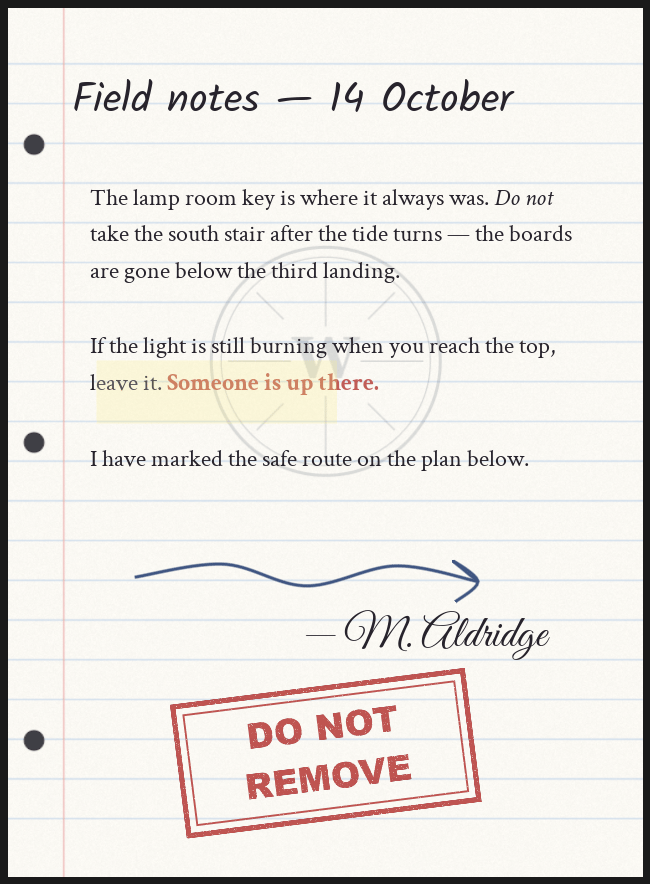
A finished page as it bakes at runtime — ink multiplied over paper, not pasted onto it.
Two minutes to see it
The plugin ships a playable showroom: enable Inkwell, turn on Show Plugin Content in the Content Browser, open/Inkwell/Maps/L_InkwellShowroom, and press Play. A
first-person reader pawn spawns with everything already bound — walk up to any exhibit,
press E to pick it up, turn pages with the arrow keys or mouse wheel, flip the sheet
over with F, put it back with Q. The map needs nothing from your project, not even
input assets. The quickstart starts there.
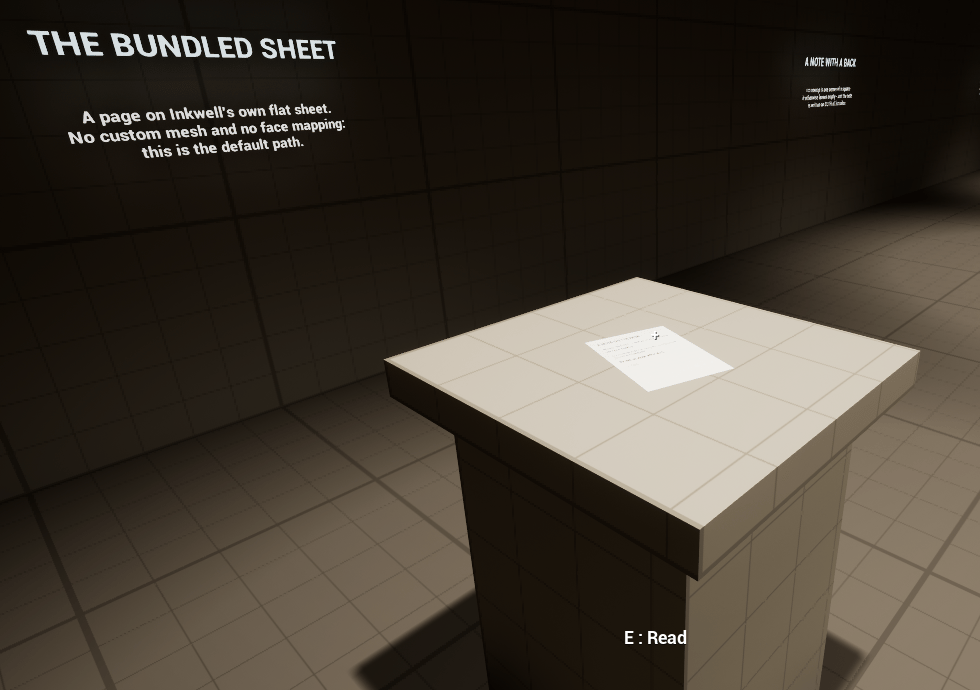
The sample note on its podium in the showroom.
What you get
A real page editor. Type straight onto the paper. Select a word, change its font, size or color, hit B / I / U. The right-hand preview renders through the exact same bake path the game uses, so what you see is the pixels that ship. Layers. A page is an ordered back-to-front stack of layers —Text, Image or
Drawing. Index 0 is the back of the page, the last entry the front, so a watermark can
sit under the writing while a stamp sits over it. Text is a layer payload, which means one
page can carry a heading, a body and a signature as three independent text boxes with
pictures stacked between them.
Drawing. Five brushes — pen, pencil, marker, crayon and highlighter — drawn
procedurally, with color, size and opacity, plus an eraser that rubs out the ink under the
cursor instead of deleting whole strokes. No brush textures ship with the plugin, and none
are needed.
Four kinds of paper. A document’s paper can be a texture you supply, paper Inkwell
generates itself — plain, lined, grid or dotted stock with your own colors, spacing, an
optional margin rule, punched binder holes and fiber grain — a whole material of your own
carrying the MF_InkwellPageInk material function, or no paper from Inkwell at all: the
ink is laid onto whatever material the target mesh already wears. A project can ship
notebook paper, graph paper and inked wooden signs without a single paper texture.
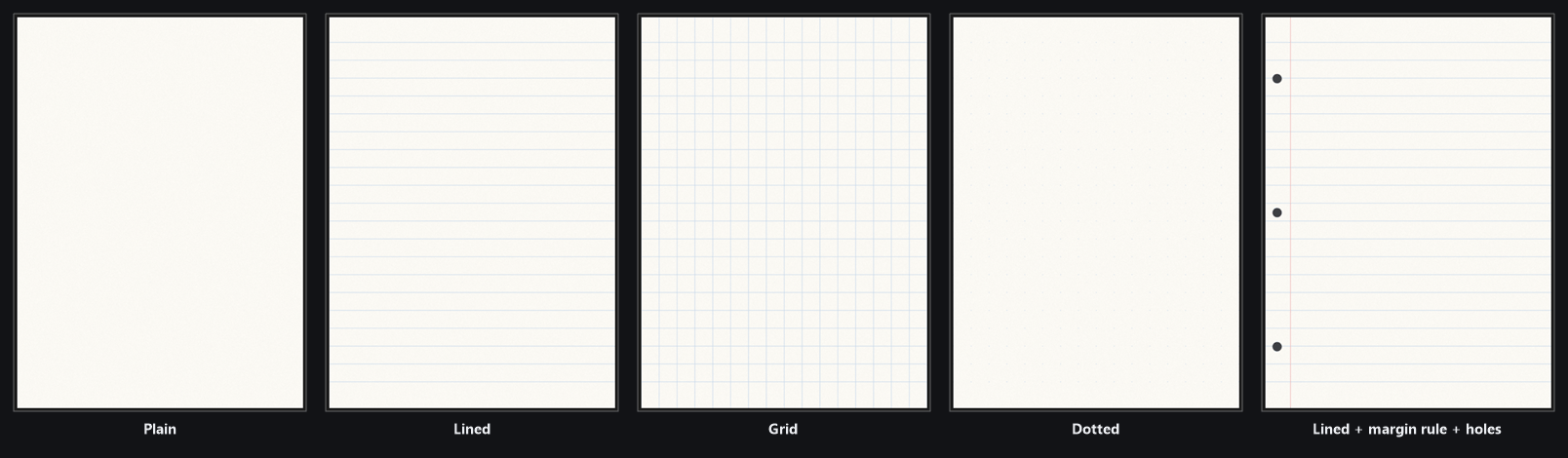
Generated paper: plain, lined, grid, dotted, and lined with a margin rule and punched holes.
The pieces
These are the production components — the parts your game ships:
The plugin also bundles a set of demo and reference pieces so the showroom plays out
of the box and so you can read a complete working integration: the
Ink Page Interactor (
UInkPageInteractorComponent, the
“look at a page, press E” component), the Inkwell Reader Character
(AInkwellReaderCharacter), the Inkwell Reader Game Mode
(AInkwellReaderGameMode), the Inkwell Exhibit component
(UInkwellExhibitComponent) and the read prompt widget (WBP_InkwellReadPrompt). They
are reference implementations, not recommended for production use — in your game, your own
interaction system drives an Ink Page Reader directly. The
integration guide shows exactly that.
No strings attached
The runtime module depends on engine modules only —Core, CoreUObject, Engine,
InputCore, EnhancedInput, Slate, SlateCore, UMG, DeveloperSettings, plus
private RenderCore and RHI. The one plugin dependency is Enhanced Input, which ships
with the engine and is enabled in every UE5 project by default. No third-party libraries,
nothing else pulled into your project. Everything is Blueprint-callable, so a
Blueprint-only project can use all of it.
Five open-licensed font families ship in /Inkwell/Fonts/ — Courier Prime, Crimson Text,
Great Vibes, Kalam and Patrick Hand — imported as composite fonts and ready to use. Bring
your own with font import.
Every asset Inkwell loads resolves through Project Settings → Plugins → Inkwell, so a
project can repoint the ink material, the sheet mesh, the paper texture or the default font
without touching code.
Next
Press Play, then make it yours
See the showroom working in two minutes, author a page, and wire reading into your own
interaction system.
I already have an interaction system
Keep your interactor and your base interactable Blueprint. Drive an Ink Page Display
and an Ink Page Reader from what you already have.
I have not installed it yet
Install from Fab, enable the plugin per project, check it took, and set the settings
that matter on day one.
I want to see the editor first
The Page Editor end to end: the toolbar, the three modes, layers, and the game-true
preview.